Sacred Union in Christianity

Celebrating the Archetypal
Bride and Bridegroom

The work and research of Margaret Starbird — reclaiming Mary Magdalene, the lost Bride at the heart of the Christian story.

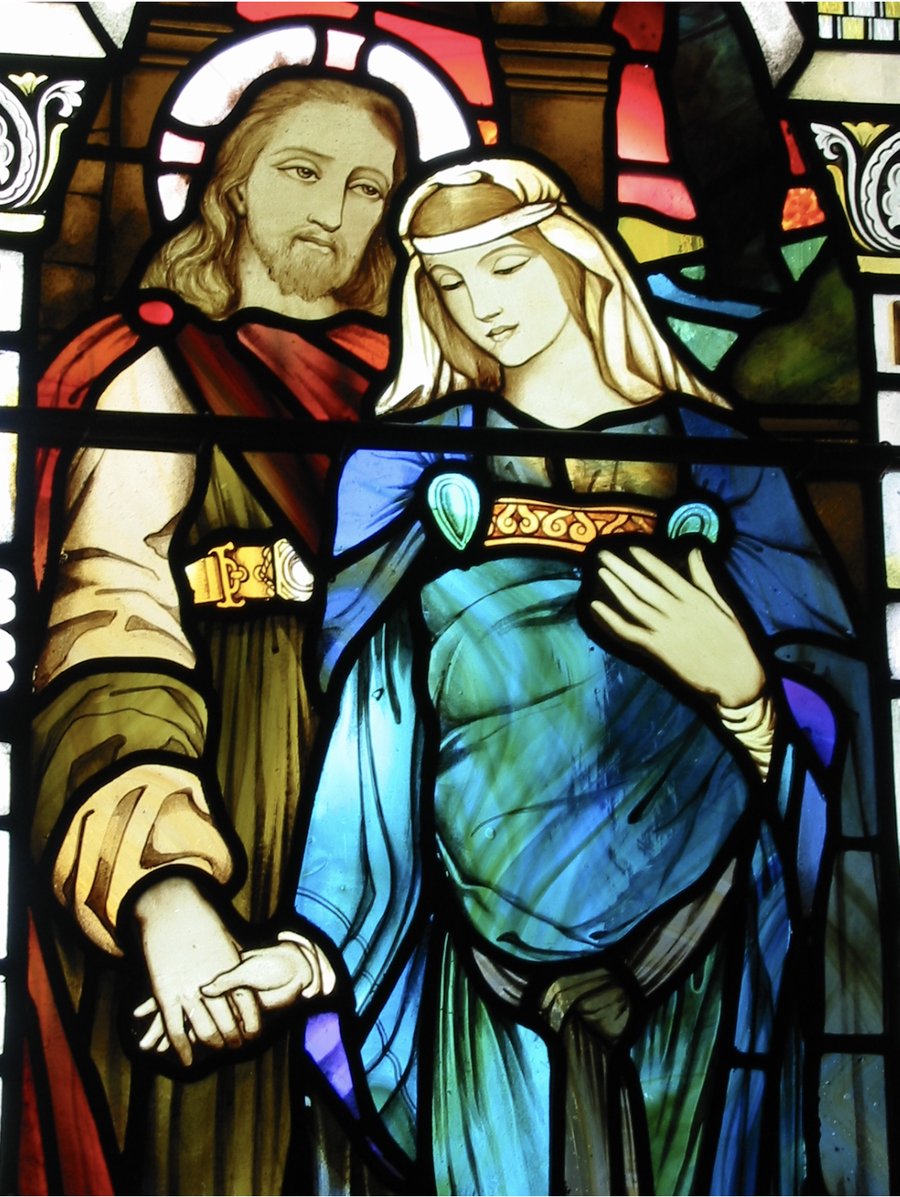
Stained glass window of the Bride and Bridegroom clasping right hands
Stained Glass Window Bride & Bridegroom · Kilmore Church
(image loads on the live site — or upload it to embed)

The Sacred Union

"Clasping right hands" is part of the Christian liturgy of marriage.

The Bride and the Bridegroom, joined hand in hand — the image at the heart of Margaret Starbird's work, rendered in glass at Kilmore Church on the Isle of Mull.

Stained glass window by Stephan Adam, 1906. Kilmore Church, Dervaig, Scotland. Photo courtesy of John Shuster.

"For the King's banquet, my nard spread its fragrance around him."

Song of Songs 1:12

". . . there came a woman with an alabaster jar of ointment, genuine nard of great value; and breaking the alabaster jar, she poured it on his head."

Mark 14:3

"Then Mary took a pound of ointment, genuine nard of great value, and anointed the feet of Jesus and wiped his feet dry with her hair. And the house was filled with the fragrance of her ointment."

John 12:3

The Question

Was Jesus married?

The Gospels say nothing explicit about the marital status of Jesus — but in first-century Judaism there was no word for "bachelor." Marriage was a cultural imperative, and the silence of the texts must be read against the norms of the society in which he actually lived.

Drawing on Scripture, art, heraldry, and the language of symbol, Margaret Starbird's books reclaim the Sacred Partnership at the center of the Christian story — the forgotten Bride whose presence was carried forward in image and legend in Western Europe.

Margaret's Story

A scholar who set out to refute a heresy — and found its evidence instead.

Margaret Starbird's theological beliefs were shaken when she first encountered the claim that Jesus was married and that his bloodline survived in Europe. A Roman Catholic and scholar of comparative literature and European history, she set out to disprove it.

What she found instead was a coherent body of evidence for the forgotten Bride of Jesus — and the survival of that belief in medieval Europe.

Her research traces the heresy of the Holy Grail, whose adherents held that Jesus and Mary Magdalene were wed, and that his wife and child fled to Gaul during persecutions of Jesus' followers in Jerusalem.

Suppressed by the Inquisition from the mid-thirteenth century, the tradition survived in an underground stream of esoteric wisdom — guarded and passed down by artists, artisans, poets, alchemists, and the Knights Templar.
The Books

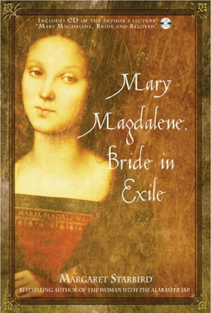
Margaret Starbird's books

An Underground Stream

The symbols that carried the story

When a story is forbidden, it survives in pictures. Across medieval Europe, the Bride was hidden in plain sight — in art, artifact and sacred number.

The Alabaster Jar

The woman who anoints with costly nard — the prerogative of the Bride in rites of Sacred Marriage in the ancient Near East.

The Six-Pointed Star

Two interlocked triangles — blade and chalice, fire and water, masculine and feminine — joined as one: the emblem of the sacred marriage.

The Vesica Piscis

The mandorla symbol of the Union formed when two equal circles intersect creating the () “vessel of the fish," an ancient symbol for the Sacred Feminine.

The Unicorn

Prominent watermark and symbol representing the Bridegroom Christ in medieval art and artifact.

The Grail

The Sangraal” — Chalice that represents the Lost Bride, the vessel that once contained the royal bloodline of Jesus.

The Red Letter X

A secret symbol of the "Church of Amor," the heresy of the Holy Grail, representing its fundamental tenet of enlightenment.

The Fishes

Symbol for the Lord and Lady of the Age of Pisces, dawning at the beginning of the 1st Century. Early Christians identified themselves with the sign of a fish, and fishes, fishing and fishermen are frequent motifs in the Gospels.

On Margaret's Work

Margaret Starbird's work is of particular interest to me because it fuses the diverse fields of symbolism, mythology, art, heraldry, psychology, and gospel history. Her research opens doors for each of us to further explore the rich iconography of our own spiritual history.
Dan Brown, author of The Da Vinci Code and The Lost Symbol

Listen & Watch

Beyond the page